



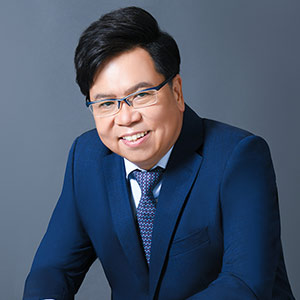
 Cher Koon Teo, Managing Director and President
From foundations to a full-stack technology
Industrial automation was founded on motion control: precise motors and controllers that move parts inside a machine or along a manufacturing line. Today, motion control remains a critical technology for automation systems. No matter how much Industry 4.0 intelligence is built into a machine, it will fail if it cannot place parts or tools correctly.
Over the years, a large, “full-stack” of automation technology has grown on top of the foundations of motion control:
• Programmable Logic Controllers (PLCs) and basic control software allowed machines to perform simple automated tasks.
• Supervisory Control and Data Acquisition (SCADA) and Manufacturing Execution Systems (MES) helped connect machines to software control for whole-line or whole-floor manufacturing automation.
Today, the full stack has blossomed into robust Industry 4.0 technologies that not only connect machines but deliver intelligent insights, analytics and control decisions into automated manufacturing. Key enabling technologies for Industry 4.0 automation include:
• Industrial Internet of Things (IIoT) technologies such as sensors, microcontrollers, and lightweight communications modules allow all machines and individual parts, tools, pallets, and trucks to communicate securely with each other or with the manufacturing cloud.
• Cloud and Edge computing architectures that deliver cost-effective, low-maintenance software intelligence centrally in clouds (to increase efficiency) or remotely in the “edge” together with parts and machines (to place machine intelligence close to the production location).
• Multi-protocol communications, such as 5G wireless, TV whitespace, ethernet, and fibre optics, allow communication between machines to be tailored for cost-effectiveness and performance.
• Big data analytics and digital twins provide detailed, real-time digital representations of every part, machine, line, and facility to increase productivity, security, uptime, and risk management.
• Artificial Intelligence and machine learning allows not just machines but entire manufacturing lines and facilities to make intelligent, informed decisions without human intervention for enormous increases in quality and cost.
• Autonomous machines can make production decisions independently and even reconfigure themselves flexibly to adapt to high-mix production jobs.
But the enormous potential of Industry 4.0 comes with pitfalls for manufacturers: the technology choices are enormous, and no single vendor can produce the entire range of technologies that a customer needs. How do manufacturers find suitable partners who can navigate the full stack of technology and demonstrate clear experience with delivering high-performance solutions?
Singapore-based ISDN Holdings (“ISDN”) has grown steadily with Asia’s industrial automation over three decades.
We’ve grown our capabilities over 30 years by using the best intelligence in the world: listening carefully to our customers and making sure we build the capabilities to keep delivering reliably
As ISDN CEO Cher Koon Teo describes it, “We have grown our capabilities over 30 years by using the best intelligence in the world: listening carefully to our customers and making sure we build the capabilities to keep delivering reliably.”
The simple approach of staying close to customers has helped ISDN navigate the enormous complexities and choices of the full technology stack. Teo describes how ISDN examines the promise of Industry 4.0 technologies like TV whitespace communications, but the ultimate test of whether to back the technology is always made in collaboration with the real industrial customers who will use it.
“No single vendor can match the real-world, collective intelligence of 10,000 customers,” notes Teo. “We have built trust with customers by delivering reliably over decades, and as a result, customers trust us to listen to needs and find the right technology solutions to deliver results, over and over again.”
This approach is fully embodied in ISDN’s business model. The company does not focus only on in-house products or a small group of suppliers but instead has spent decades building access to a broad range of global technologies that it can draw from to build the right solution for customers.
“We realized early in our history that customers want working solutions, not brands. So instead of seeking out technology brands, we first listened to customer needs and then sought out the right technologies and engineering skills to bring into our portfolio to deliver great solutions for our customers,” notes Teo.
This approach has helped ISDN reach its scale across Asia today. The company is publicly listed on the Singapore stock exchange. It has developed vertical industry and technology competence pillars as it’s grown across the full technology stack from motion control to full cloud solutions.
ISDN’s full-stack capabilities have propelled it into ground-breaking new solution areas today. Customers partner with ISDN on projects ranging from advanced indoor farming automation to high-speed rail transportation, electric vehicle charging networks, cloud computing infrastructure, and building automation.
These various solutions incorporate a full range of Industry 4.0 technologies from manufacturing digital twins to artificial intelligence-enabled predictive maintenance solutions, building information systems, and secure cloud analytics and intelligence.
ISDN’s capabilities are backed by 400 engineers located throughout Asia. Teo notes that “almost half of our employees are engineers, and we’ve placed our technical talent throughout the Asian continent so that they can be close to customers.
We don’t just deliver Industry 4.0; we embody it too: our engineers may be distributed around Asia, but we use digital collaboration to consolidate expert knowledge, technology libraries and field learnings to make use of our scale. This means we are close to our customers geographically, but we’re still building our knowledge and scale all the time.”
“Investors are often surprised that 30-year oldISDN has a culture that is so vibrant and full of energy. It’s clear from the moment they step into our offices. I believe this energy serves us well in the rapidly-changing technology industry: we must constantly re-invent and re-energize ourselves,” notes Teo.
ISDN credits its customer approach as a key driver for its energetic culture. “By focusing on delivering success to customers rather than chasing new technology for its own sake, we create more lasting energy at ISDN,” says Teo. “New technologies can create short-term excitement, but if they don’t deliver solid benefits to customers, our team will end up as disappointed as our customers.”
Sustainability and responsibility
ISDN embraced a shift to sustainable business almost a decade ago, well before the modern global push towards sustainability.
-
Our investors are often surprised that a 30-year-old company has a culture that is so vibrant and full of energy. I believe this energy serves us well in the rapidly-changing technology industry, as we must constantly re-invent and re-energize ourselves
Teo reflects, “Even a decade ago, we could see that Asia would need sustainable industry and we began investing behind this shift. This is not only good for the continent: it’s good for our customers to partner with sustainable companies like ISDN, and good for our employees and investors to see that we are doing our part to build the broader community.”
ISDN has sponsored three commercial mini-hydropower plants in Asia and delivers solutions with solar energy and renewable energy storage. These initiatives provide ISDN with an integrated approach to sustainable business and demonstrate ISDN’s capabilities for providing customer solutions in a sustainable industry.
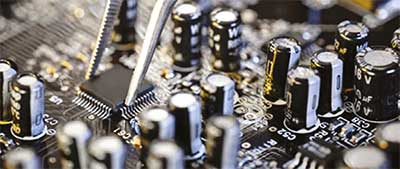
Additionally, ISDN’s approach to automation encompasses full-lifecycle sustainability, from design to delivery, maintenance, and upgrade paths that re-use capabilities cost-effectively rather than creating machine waste.
Growing potential but growing complexity
ISDN sees growing potential with industrial automation as digitalization accelerates throughout Asia. The capabilities of semiconductors, software and machine intelligence continue to increase even as technology costs decrease over time. But as technology accelerates, the complexities facing manufacturers are also increasing.
“We are confident that our approach is the right one for manufacturers,” says Teo reflecting on the growth in automation, “We have a proven track record across 10,000 customers, full-stack engineering capabilities, and broad access to global technologies. Our deep customer intelligence gives us a unique perspective on what technologies to unlock next and how to transform that insight into cost-effective solutions for customers.”
